The Metamorphosis Was Not the Trap
A re-reading of Kafka’s “The Metamorphosis” arguing the transformation exposes imposed obligations rather than entrapment.
Gregor is a travelling salesman, working at the firm his father is indebted to. Bound to pursue the job till he repays the debt.
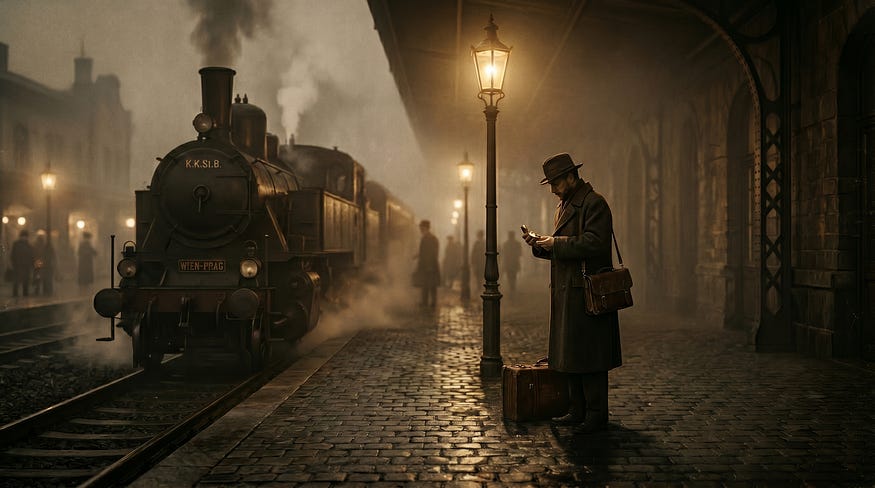
Furthermore, he has to wake up at 4 am, swing by many stations, disrupt his eating patterns (food is bad, too), and has no hint of a stable relationship. He sets a countdown to quit this onerous job, i.e., 5–6 years. This way, his own freedom is inversely proportional to the amount of someone else’s debt.
His sister, Grete, is naturally gifted on the Violin. Gregor expresses a quiet wish to send her to a conservatory by funding her. He is inclined to sponsor her dream but has no dreams of his own. Another example of his suppressed selfhood is that his only personal belonging, chosen by him, that reflects his personal preference is the magazine cut of “a woman in fur” that he frames with his own hands.
What would be the first reaction of someone turning into a vermin? Others might be horrified by their absurd appearance, but in Gregor’s case, it is something else. Soon after metamorphosis, his first thoughts are about missing the train, being late, and what the boss would think. Even in a cockroach’s body, his thoughts are tied to duty, showing how deeply the imposed demands of his life distort him.
In the opening pages, Gregor admits that he would have left the job long ago if he did not have to support his family, which points to the fact that he is aware that the job is a cage. The family completely starts relying on him and stops working since his father’s business collapsed. None of them aids Gregor. Moreover, the savings his father holds are beyond his awareness, so the family is not forced to depend on him, and yet they choose dependency.
Gregor is always perceived functionally by his family, and gradually, the imposition that he receives makes him lose his inner voice. His identity is obliged solely to provide, irrespective of his form.
The metamorphosis, then, does not create this condition — it merely exposes it.
In vermin form, due to his unrecognizable speech, he becomes incomprehensible to his family from the first morning. He loses his ability to explain, negotiate, and protest.
Moreover, he is powerless and unable to work, which means his prior way of life — the debt, the boss, the 4 AM alarms — is now irrelevant to him overnight. This transition liberates Gregor from all the social obligations, like managing relationships, presenting oneself, and acting ordinarily. No one expects anything from a cockroach.
This new form gives him the ability to crawl, so he explores the room with a sense of curiosity and mild pleasure. He is neither afraid nor worried about discovering his capabilities. Additionally, he starts liking rotten food over fresh food, a typical vermin diet. These are small details, but they indicate that Gregor develops preferences that solely serve him.
When Grete and his mother start moving the furniture out of his room to augment his free crawling space, he feels the loss momentarily because he had grown up with the same things in the same positions. But he quickly moves beyond this sorrow and unclenches from the remnants of his former life one by one.
The family soon stops addressing him; his father injures him by throwing apples at him, and his mother, though with no hostile intent, still cannot bear his appearance and faints at his sight. Grete, who initiates with genuine care, soon treats him like a daily chore and nothing else. He is utterly alienated, like the dust on forgotten furniture.
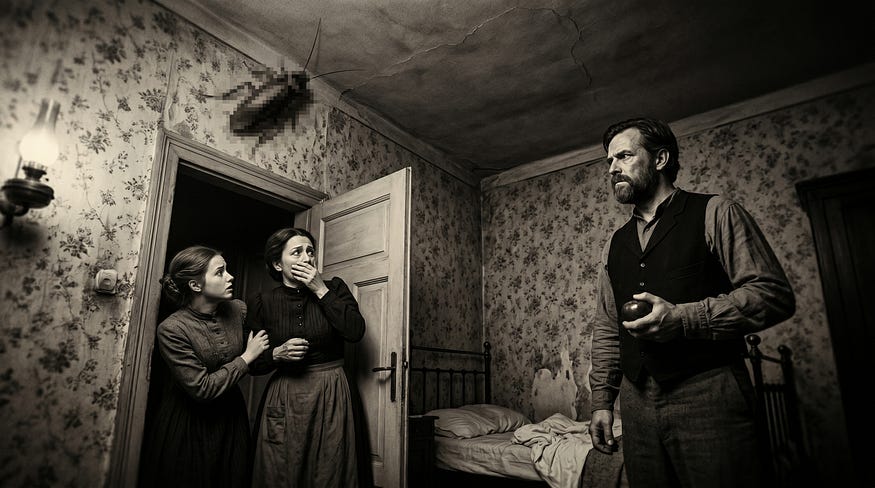
Nevertheless, this also means that no one demands anything from him. This setting is cruel, but it is also the first time Gregor is liberated from his performance for a sustained period. As his sister plays the violin, he finally experiences a rare and pure moment of feeling that is unburdened from any obligations. This moment is the only one where he is beyond his usual suffocated self, perceiving something truly beautiful.
What’s the point of freedom if you cannot consciously sense it? This is the case with our vermin, even though he is loosening ties with his human attachments, and his family is ignoring him, his human instincts keep pulling him back. He is still worried about finances, hiding from lodgers, and protecting Grete’s playing.
The liberation is accidental, precisely because Gregor never desires it. When a man is so conditioned to just provide for others, the concept of freedom is just like grass in an area comprising only a Carnivore. It is available, but inedible.
The novel’s closing act confirms this with finality.
During the economic crisis of his family, three lodgers move in. This helps the family sustain, and they do their best to hide Gregor from these lodgers. However, he is lured out by Grete’s melodious playing, which worsens the economic crisis of the family, as the lodgers immediately threaten to leave without paying. He is aware of this consequence and is struck by guilt immediately.
Being a vermin, he still monitors his family’s financial situation, worried about their comfort, and adjusts his behaviour accordingly to minimize the disruption to them. However, this single lapse triggers the most breaking moment for him, which is when Grete finally declares, “We must get rid of it.”
She argues with her family that if this thing — the vermin — were really Gregor, he would have understood their suffering and left willingly. It is devastating for him, but somewhere he understands that she is right, although accidentally, but right. He just cannot act upon it till she explicitly states it.
After her declaration, that night the vermin dies quietly in his room. As context, from days before this event, Grete has stopped feeding him properly, and he is suffering from the apple wound his father gave him. But the narrative sets death as a decision, not mere physical collapse. He leaves the world while thinking about his family, not with any hate, but just tenderness and acceptance.
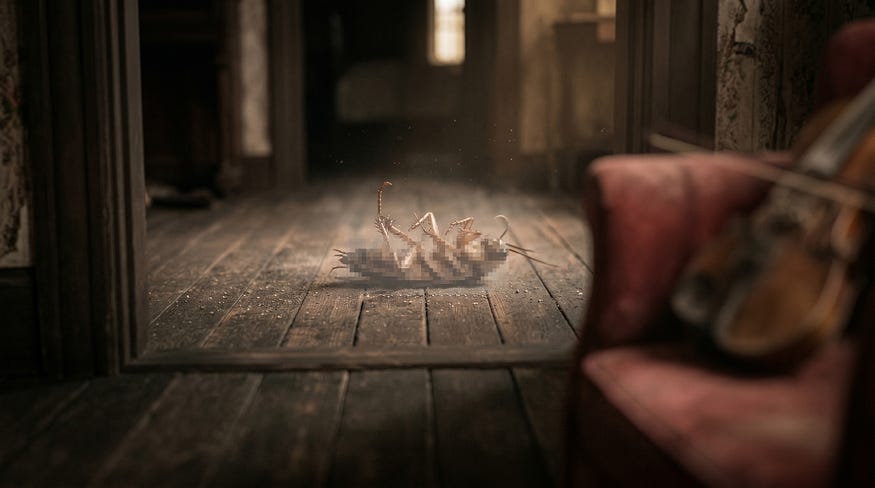
His obligation to serve his family is so great that he erases himself from this world when he causes a problem for them. This extreme selfless act is his final service.
This act also provides something to his family; the value that he provides is relief. The family reorganizes itself within hours of Gregor’s death, as if he had never been born. They take a tram to the countryside and start a new life, where they begin planning for Grete’s future. His erasure is total and immediate.
The nonchalant charwoman, who discovers his lifeless body, treats it with indifference and amusement. She conveys the information like some housekeeping work, “it’s taken care of.” Mourning is secondary; no one from his family even bothers to look at his body.
For Gregor, death is the only path to freedom, and even this he accepts not for himself, but as one last performance for his family.
What if he turned back human? It would have changed nothing because he could not have left his family, still. After all, the cage was never his human or vermin form, but his mentality.